Theme · In-depth study
The Angel of the LORD
The Divine Messenger of the Old Testament
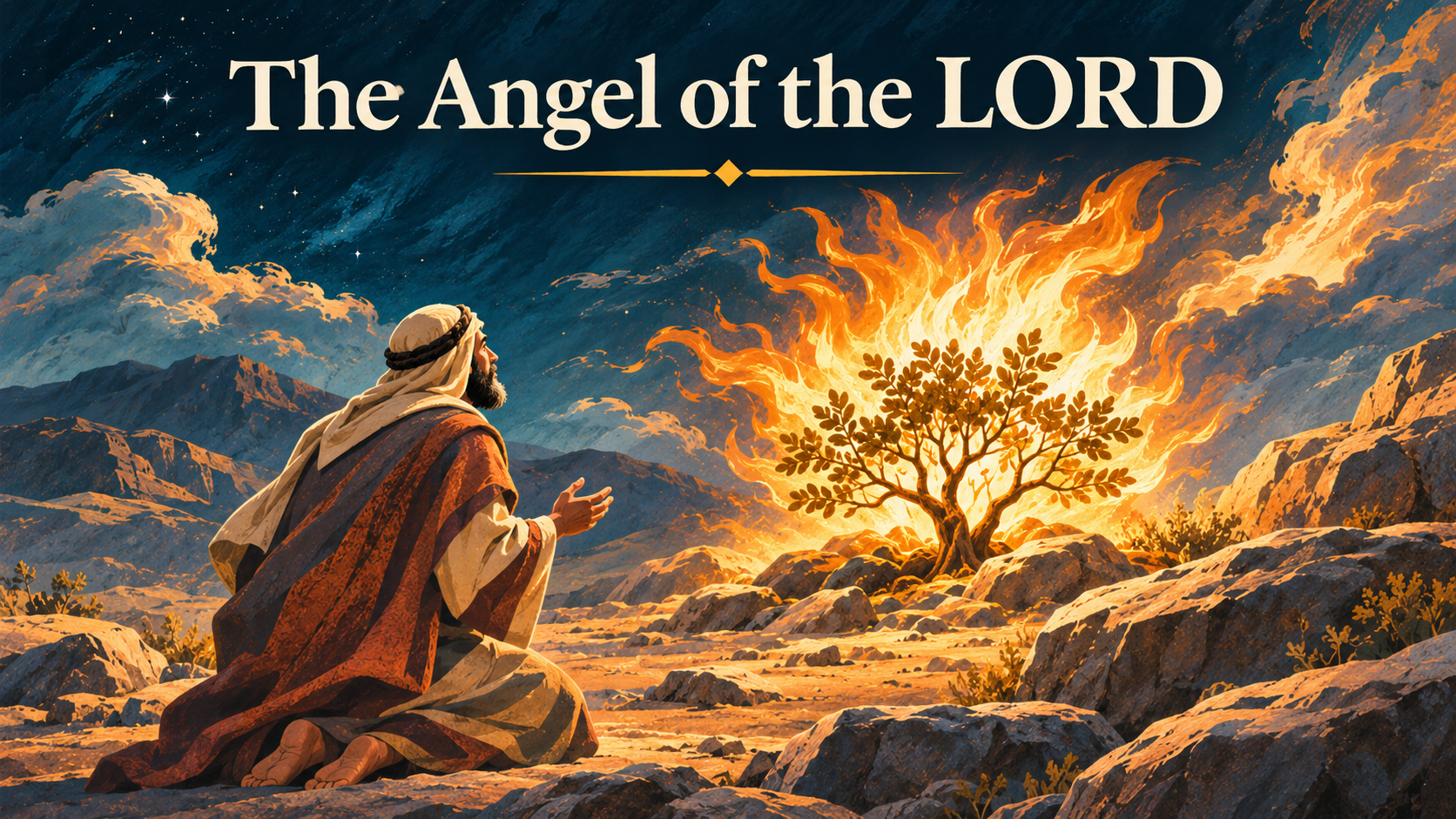
Who is the mysterious Messenger who appears throughout the Old Testament, speaks as God, bears God's name, exercises divine authority — and yet is sometimes distinguished from YHWH?
Throughout the Old Testament, a mysterious figure appears who is called the Angel of the LORD. At times He speaks as God's messenger; at other times the narrator identifies the speaker as God Himself. Hagar names the LORD who spoke to her, Moses hears the God of Abraham from the burning bush, and Gideon fears that he has seen God. Yet in Zechariah this Messenger addresses the LORD on behalf of Jerusalem. Who is He, and why is He both so closely identified with God and distinguished from Him?
The New Testament reveals the eternal Son as the one who makes the Father known and was already active in Israel's history. Read in that light, the extraordinary divine-Messenger encounters give strong reasons to recognize Christ before He became human. An ordinary angel can speak with authority received from God, so neither the title nor divine speech alone proves His identity. The case rests on the encounters together: God's own presence and authority, the Messenger's distinction from Him, and the Son's unique work of revealing the Father.
The central teaching
The Angel of the LORD in the major divine-manifestation narratives is the eternal, uncreated Son of God appearing before His incarnation — Jesus Christ before Bethlehem. The Old Testament presents a divine Messenger identified with YHWH yet sometimes personally distinct from YHWH; the New Testament reveals the eternal Son, distinct from the Father, fully divine, and active in Israel's history. These lines of revelation converge.
Chapter 1
Who Is the Angel of the LORD?
Why the Messenger's divine speech, God's name, and prayer to YHWH point Christians to the eternal Son. The New Testament helps us understand the Old Testament encounters.
Read chapter →Chapter 2
What Does Mal'akh YHWH Mean?
Mal'akh names a role — messenger — not a nature; it is used of humans, prophets, priests, and heavenly beings. YHWH is God's personal covenant name. The Hebrew and Greek words describe a messenger's role, not whether He is created or divine.
Read chapter →Chapter 3
Every Appearance: A Complete Biblical Index
Every major appearance, gathered into a filterable index: the exact Mal'akh YHWH passages, the 'Angel of God' passages, and related figures — with each entry's features flagged and linked to its detailed chapter.
Read chapter →Chapter 4
Hagar Encounters God: Genesis 16 and 21
The first appearance is to a runaway slave. The Angel promises in the first person what only God can promise, and Hagar names 'the LORD who spoke to her' — the God who sees me. Genesis 21's parallel and the divine-agency alternative.
Read chapter →Chapter 5
Abraham, Isaac, and the Divine Oath: Genesis 22
On Moriah the Angel says Abraham withheld nothing 'from me' — then delivers YHWH's self-sworn oath, which Hebrews 6 identifies as God's own promise. Divine promise, divine speech, and now a divine oath.
Read chapter →Chapter 6
Jacob and the Mysterious Divine Figure
The Angel of God claims outright: 'I am the God of Bethel.' Jacob wrestles a man and names the place Peniel — 'I have seen God face to face' — and Hosea calls the same figure both God and angel.
Read chapter →Chapter 7
The Burning Bush: Exodus 3
At the burning bush, the narrator moves between 'the Angel of the LORD' and 'God' with no change of speaker. Ehyeh asher ehyeh, the Septuagint's 'I am the one who is,' Stephen's retelling, and Christ in the Exodus — including the significant manuscript differences in Jude 5 and 1 Corinthians 10:9.
Read chapter →Chapter 8
The Angel Who Bears God's Name: Exodus 23
'My name is in him': God's presence, identity, and authority within the Angel. What the pardon warning does and does not say, the Angel of His presence in Isaiah 63, and the name given to the Son in John 17 and Philippians 2.
Read chapter →Chapter 9
The Angel Who Claims the Exodus: Judges 2
At Bokim the Angel claims the Exodus and the covenant oath in the first person — YHWH's own signature words — with no 'thus says the LORD' frame. The agency reading weighed honestly.
Read chapter →Chapter 10
Gideon and the Angel of the LORD: Judges 6
The narrator calls the same figure 'the Angel of the LORD' and 'the LORD' within one conversation. Gideon fears death for seeing God — and is reassured, not corrected. The contrast with Revelation's corrected angel-worship.
Read chapter →Chapter 11
Manoah and the Wonderful Name: Judges 13
The Angel's name is pel'i — 'beyond understanding' — withheld, as at Peniel. He ascends in the altar flame, and Manoah cries, 'We have seen God.' The resonance with Isaiah 9:6, held carefully.
Read chapter →Chapter 12
The Angel in Judgment and Deliverance
Balaam's drawn sword, judgment stayed at the future temple site, bread for Elijah, Sennacherib's army, and the psalms of the Angel's protection — with the caution that power alone does not prove identity.
Read chapter →Chapter 13
The Angel Who Intercedes: Zechariah 1 and 3
The Angel intercedes for Jerusalem and declares Joshua cleansed. God's future promise of the Branch and the land's cleansing is distinct, with meaningful parallels to Christ's intercession, advocacy, and saving work.
Read chapter →Chapter 15
The New Testament Reveals the Angel's Identity
Eight New Testament witnesses converge: Jude 5, 1 Corinthians 10, John 1:18, John 12:41, Acts 7, Hebrews 1, John 8, and the incarnation. The Old Testament Messenger and the New Testament Son are one person.
Read chapter →Chapter 16
Early Christian Witness, Objections, and Final Conclusion
Justin, Irenaeus, Tertullian, and Origen in their historical settings; sixteen questions about the interpretation; and the biblical evidence brought together.
Read chapter →Why this matters forever
If the Son was already speaking, promising, judging, and interceding throughout the Old Testament, then Jesus Christ did not enter the story at Bethlehem — Bethlehem is where the story's central figure took flesh. The God of Israel and the God and Father of our Lord Jesus Christ are one, and His saving presence runs through the whole of Scripture.
The divine Messenger who stopped Abraham's hand, spoke from the bush, and interceded for Jerusalem is recognized in the Son who now intercedes at the Father's right hand. The New Testament reveals Him as Jesus Christ, and everyone who calls on the Lord's name will be saved.